
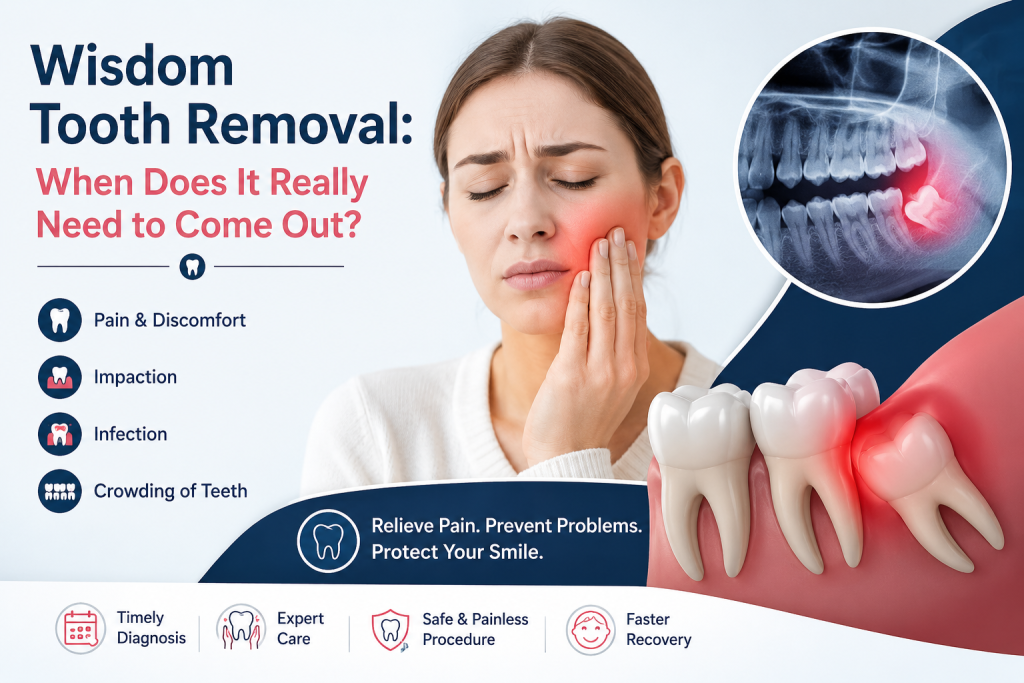
If you’ve recently started feeling pain at the back of your mouth, your wisdom tooth could be the reason. One of the most common questions dentists hear is, “Do I really need to remove my wisdom tooth?”
The answer isn’t the same for everyone.
Some wisdom teeth grow normally and never cause problems, while others become impacted, painful, or infected, making removal the best option. Understanding when wisdom tooth extraction is necessary can help you avoid future complications and protect your oral health.
If you’re looking for the best dentist in Dwarka, Family Dental offers expert diagnosis and safe wisdom tooth removal using modern dental technology.
What Is a Wisdom Tooth?
Wisdom teeth are the last set of molars to erupt, usually between the ages of 17 and 25 years. Most people develop four wisdom teeth—one in each corner of the mouth.
Thousands of years ago, these teeth helped humans chew coarse foods. Today, our jaws are generally smaller, leaving less space for wisdom teeth to emerge properly. As a result, many wisdom teeth become impacted or grow at an angle.
Do All Wisdom Teeth Need to Be Removed?
No.
A wisdom tooth only needs to be removed if it is causing pain, infection, damage to nearby teeth, or other dental problems. If the tooth is healthy, fully erupted, properly aligned, and easy to clean, your dentist may simply monitor it during routine check-ups.
Regular dental examinations and X-rays help determine whether removal is necessary.
Signs That Your Wisdom Tooth May Need Removal
1. Persistent Pain
Pain or discomfort at the back of your jaw is one of the earliest warning signs. It may begin as occasional discomfort but can become more frequent as the tooth continues to erupt.
Ignoring the pain may lead to more serious dental complications.
2. Impacted Wisdom Tooth
An impacted wisdom tooth does not have enough room to grow normally. It may remain trapped beneath the gums or grow sideways, pressing against the neighboring tooth.
Impacted teeth often cause:
- Jaw pain
- Swelling
- Difficulty opening the mouth
- Infection
- Pressure on adjacent teeth
3. Swollen or Infected Gums
Partially erupted wisdom teeth create small spaces where food particles and bacteria can collect.
This can lead to:
- Red or swollen gums
- Bad breath
- Pain while chewing
- Bleeding gums
- Recurrent gum infections (Pericoronitis)
Repeated infections usually indicate that extraction is the best solution.
4. Damage to Nearby Teeth
When a wisdom tooth pushes against the second molar, it can damage the surrounding tooth and gums.
Possible complications include:
- Tooth decay
- Root damage
- Bone loss
- Crowded teeth
Removing the wisdom tooth early can help preserve the health of neighboring teeth.
5. Tooth Decay
Because wisdom teeth are located at the very back of the mouth, they are difficult to clean properly.
Food particles and plaque easily accumulate around them, increasing the risk of cavities and gum disease.
6. Cyst Formation
Although uncommon, impacted wisdom teeth may develop cysts around the tooth.
If untreated, these cysts can damage the jawbone, nearby teeth, and surrounding tissues. Early diagnosis through digital X-rays helps prevent serious complications.
What Happens During Wisdom Tooth Removal?
Many people are nervous about wisdom tooth extraction, but the procedure is usually straightforward and comfortable.
Dental Examination
Your dentist first performs a clinical examination and takes digital X-rays to evaluate the position of the tooth.
Local Anaesthesia
The treatment area is completely numbed so that you remain comfortable throughout the procedure.
Tooth Extraction
Depending on the position of the tooth, your dentist may:
- Remove it normally
- Make a small incision in the gum
- Divide the tooth into smaller sections for easier removal
Stitches
Some cases require stitches, which are either dissolvable or removed during a follow-up visit.
The entire procedure generally takes between 20 and 45 minutes, depending on the complexity.
Recovery After Wisdom Tooth Removal
Recovery is usually quick, with most patients returning to normal activities within a few days.
To ensure faster healing:
- Apply an ice pack during the first 24 hours.
- Take medications exactly as prescribed.
- Eat soft foods such as yogurt, soup, mashed potatoes, or khichdi.
- Avoid smoking and alcohol.
- Do not drink through a straw for several days.
- Maintain good oral hygiene while avoiding the surgical area.
- Get adequate rest.
Following your dentist’s instructions significantly reduces the risk of infection and dry socket.
Is Wisdom Tooth Removal Painful?
Thanks to modern dental techniques and local anaesthesia, the procedure itself is generally painless.
You may experience mild swelling, soreness, or stiffness for a few days after the extraction, but these symptoms are usually manageable with medication and proper aftercare.
Can You Delay Wisdom Tooth Removal?
If the wisdom tooth is healthy and symptom-free, removal may not be necessary.
However, delaying treatment when the tooth is already causing pain or infection can lead to:
- Severe infections
- Gum disease
- Damage to adjacent teeth
- Difficulty chewing
- More complex surgical procedures later
Early diagnosis often results in a simpler and smoother treatment experience.
Why Choose Family Dental in Dwarka?
At Family Dental, patient comfort and safety are our highest priorities. Our experienced dental team provides personalized care and advanced treatment for wisdom tooth removal in a clean, modern environment.
We offer:
- Comprehensive dental consultations
- Digital X-ray diagnosis
- Safe and minimally invasive extraction techniques
- Experienced dental professionals
- Strict sterilization protocols
- Personalized post-treatment care
- Comfortable, patient-friendly environment
Whether your wisdom tooth requires monitoring or removal, our team ensures you receive the right treatment at the right time.
Frequently Asked Questions
At what age do wisdom teeth usually appear?
Most wisdom teeth erupt between 17 and 25 years of age, although the timing varies from person to person.
How long does recovery take?
Most patients recover within 3 to 7 days, while complete healing may take a few weeks depending on the complexity of the extraction.
Can I eat after wisdom tooth removal?
Yes. Soft foods such as yogurt, soups, smoothies, oatmeal, and mashed vegetables are recommended for the first few days.
Is every impacted wisdom tooth removed?
Not always. If an impacted wisdom tooth isn’t causing pain, infection, or damage, your dentist may recommend regular monitoring instead of immediate removal.
Conclusion
Wisdom teeth don’t always need to be removed, but when they cause pain, infection, swelling, or damage to nearby teeth, early treatment is the best way to prevent more serious complications.
If you’re experiencing discomfort at the back of your mouth or suspect your wisdom tooth is causing problems, don’t ignore the symptoms. A timely dental examination can help determine the right course of treatment.
If you’re searching for the best dentist in Dwarka, Family Dental offers expert diagnosis, advanced wisdom tooth extraction, and compassionate care to keep your smile healthy and pain-free.
Schedule your appointment today and let our experienced dental team help you maintain excellent oral health.