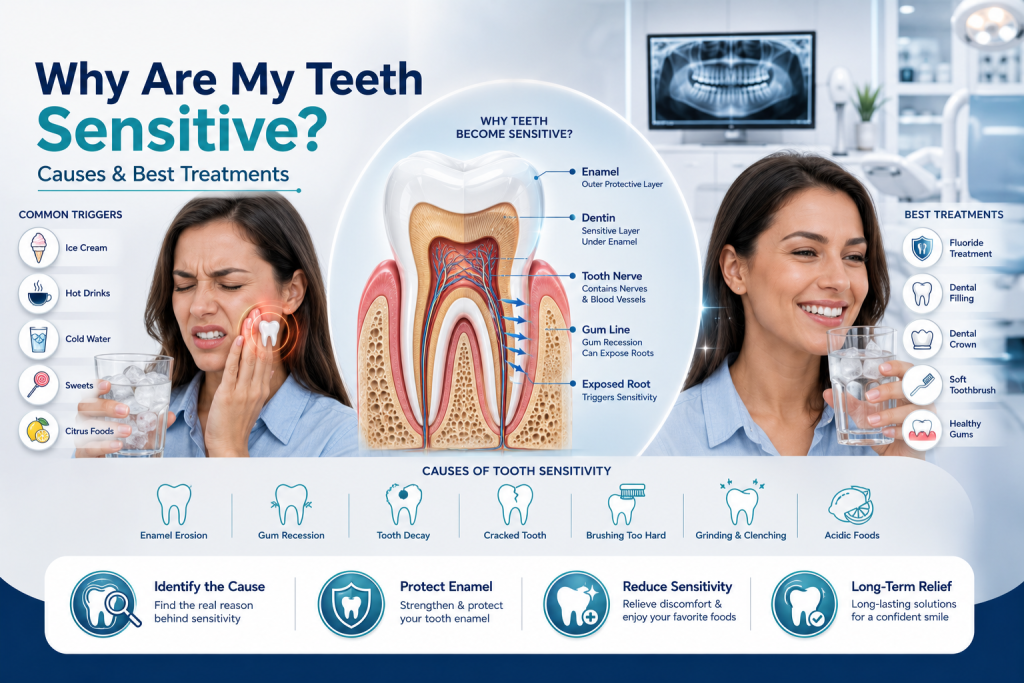
Have you ever taken a sip of hot coffee or bitten into an ice cream, only to feel a sudden, sharp pain in your teeth? If yes, you’re not alone. Tooth sensitivity is a common dental problem that affects people of all ages. While the discomfort may last only a few seconds, it can make everyday activities like eating, drinking, or even brushing your teeth quite unpleasant.
Many people ignore sensitive teeth, hoping the problem will disappear on its own. However, recurring sensitivity is often a sign that your teeth need attention. Identifying the cause early can prevent more serious dental issues and help you get lasting relief.
If you’re looking for the best dentist in Dwarka, Family Dental offers advanced diagnosis and personalized treatment plans to help you enjoy your favourite foods and drinks without discomfort.
What Is Tooth Sensitivity?
Tooth sensitivity, also called dentin hypersensitivity, occurs when the protective outer layer of your tooth (enamel) becomes worn down or when the roots of your teeth become exposed.
Beneath the enamel is a softer layer called dentin, which contains thousands of tiny channels connected to the tooth’s nerve. When hot, cold, sweet, acidic foods—or even cold air—reach these channels, they stimulate the nerve, causing a sudden, sharp pain.
Occasional sensitivity may not be a major concern, but if it happens frequently, it’s important to find out why.
Common Causes of Tooth Sensitivity
There isn’t just one reason why teeth become sensitive. Several dental problems can expose the inner layers of the tooth and trigger discomfort.
1. Worn Enamel
Your enamel acts as a protective shield for your teeth. Over time, it can wear down due to everyday habits.
Common causes include:
- Brushing too hard
- Using a hard-bristled toothbrush
- Teeth grinding or clenching
- Frequent consumption of acidic foods and drinks
Once the enamel becomes thin, the dentin underneath is exposed, making your teeth much more sensitive.
2. Receding Gums
Healthy gums protect the roots of your teeth. When gums begin to recede due to gum disease, aggressive brushing, or natural ageing, the roots become exposed.
Unlike the crown of the tooth, the roots aren’t covered by enamel, making them highly sensitive to temperature changes and certain foods.
3. Tooth Decay
A cavity doesn’t always begin with severe pain.
In many cases, the first sign of tooth decay is sensitivity when eating sweets or drinking something hot or cold. As the cavity grows deeper, the discomfort becomes more noticeable.
Early treatment can prevent further damage and save the tooth.
4. Cracked or Chipped Teeth
Even a tiny crack can expose the inner layers of your tooth or allow bacteria to reach the nerve.
You may notice sensitivity when chewing or biting down, and the pain may come and go depending on the pressure placed on the tooth.
Prompt treatment helps prevent the crack from becoming worse.
5. Teeth Grinding (Bruxism)
Many people unknowingly grind or clench their teeth while sleeping.
Over time, this habit wears away the enamel and increases tooth sensitivity. It may also cause jaw pain, headaches, and worn-down teeth.
If grinding is the cause, your dentist may recommend a custom-made night guard.
6. Gum Disease
Gum disease affects more than just your gums—it can also expose the roots of your teeth.
Common signs include:
- Bleeding gums
- Swollen or tender gums
- Persistent bad breath
- Loose teeth in advanced stages
Treating gum disease often helps reduce tooth sensitivity as well.
7. Recent Dental Treatment
It’s normal to experience temporary sensitivity after certain dental procedures, including:
- Teeth whitening
- Dental fillings
- Crowns
- Professional scaling and cleaning
This usually settles within a few days. However, if the pain continues or worsens, it’s important to return to your dentist for a review.
8. Acidic Foods and Drinks
Regular consumption of acidic foods can slowly erode your enamel.
Some common examples include:
- Soft drinks
- Citrus fruits
- Sports drinks
- Energy drinks
- Vinegar-based foods
Reducing acidic foods and rinsing your mouth with water afterwards can help protect your enamel.
Signs You May Have Sensitive Teeth
Tooth sensitivity isn’t always the same for everyone.
Common symptoms include:
- Sharp pain when drinking hot or cold beverages
- Pain while eating ice cream
- Sensitivity to sweets
- Discomfort when brushing or flossing
- Pain when breathing in cold air
If these symptoms occur regularly, it’s time to schedule a dental examination.
Best Treatments for Sensitive Teeth
The right treatment depends on the underlying cause. At Family Dental, we perform a detailed examination before recommending the most suitable solution.
Desensitizing Toothpaste
Special toothpaste for sensitive teeth blocks pain signals travelling to the nerve. With regular use, many patients notice significant improvement within a few weeks.
Professional Fluoride Treatment
Professional fluoride applications strengthen weakened enamel and reduce sensitivity by protecting exposed dentin.
The procedure is quick, comfortable, and highly effective.
Tooth-Coloured Fillings
If tooth decay or damaged fillings are causing sensitivity, restoring the tooth with a filling often provides immediate relief.
Gum Disease Treatment
Professional cleaning and periodontal treatment remove bacteria, improve gum health, and protect exposed tooth roots.
Dental Crowns or Bonding
Cracked, chipped, or worn teeth can often be restored with crowns or tooth-coloured bonding, reducing sensitivity while strengthening the tooth.
Night Guard
If teeth grinding is wearing away your enamel, a custom-made night guard helps protect your teeth while you sleep and prevents further damage.
Can Tooth Sensitivity Be Prevented?
In many cases, yes.
Simple daily habits can help protect your teeth and reduce the risk of sensitivity:
- Brush gently using a soft-bristled toothbrush.
- Use fluoride toothpaste every day.
- Floss regularly.
- Limit sugary and acidic foods.
- Avoid chewing ice or very hard objects.
- Wear a night guard if you grind your teeth.
- Visit your dentist every six months for routine check-ups and professional cleaning.
Preventive care is always easier—and more affordable—than treating advanced dental problems.
When Should You See a Dentist?
While occasional sensitivity isn’t always serious, you should book a dental appointment if:
- Sensitivity lasts for more than a few days.
- The pain becomes stronger or more frequent.
- You notice cavities or visible damage.
- Your gums bleed or begin to recede.
- You have pain while chewing.
- Hot or cold foods become difficult to tolerate.
Early diagnosis helps prevent more complicated dental issues later.
Why Choose Family Dental in Dwarka?
At Family Dental, we understand how frustrating sensitive teeth can be. Our experienced dentists focus on identifying the root cause of your discomfort rather than simply treating the symptoms.
Our clinic offers:
- Comprehensive dental examinations
- Digital X-ray diagnosis
- Professional fluoride therapy
- Tooth-coloured fillings
- Gum disease treatment
- Dental crowns and cosmetic bonding
- Night guards for teeth grinding
- Preventive dental care
- Comfortable, patient-friendly treatment
Whether your sensitivity is caused by enamel erosion, cavities, gum disease, or teeth grinding, we’ll create a personalized treatment plan that restores your comfort and protects your smile.
Frequently Asked Questions
Is tooth sensitivity permanent?
No. In many cases, once the underlying dental problem is treated, sensitivity improves significantly or disappears completely.
Can sensitive teeth heal naturally?
Mild sensitivity may reduce over time, but persistent discomfort usually requires professional dental care to address the underlying cause.
Can whitening products make teeth sensitive?
Yes. Some whitening treatments can temporarily increase sensitivity, but this usually improves within a few days.
Which toothpaste should I use?
A fluoride-based toothpaste specially formulated for sensitive teeth is usually the best option. Your dentist can recommend the most suitable product based on your needs.
Conclusions
Tooth sensitivity may seem like a small problem, but it can often be an early warning sign of cavities, enamel erosion, gum disease, cracked teeth, or teeth grinding. Ignoring the discomfort may allow these conditions to become more serious over time.
The good news is that sensitive teeth can usually be treated successfully with the right diagnosis and care.
If you’re searching for the best dentist in Dwarka or a trusted dental clinic in Dwarka, Family Dental is here to help. Our experienced team combines advanced technology with compassionate care to identify the cause of your sensitivity and provide long-lasting relief.
Book your appointment with Family Dental today and enjoy every meal, drink, and smile without the discomfort of sensitive teeth.