
As parents, we do everything we can to keep our children healthy—from choosing nutritious meals to making sure they get enough sleep. But one area that’s often overlooked is oral health. Many parents believe that baby teeth don’t require much care because they’ll eventually fall out. In reality, healthy baby teeth play a crucial role in your child’s overall development.
Cavities are one of the most common childhood dental problems, but the good news is that they’re largely preventable. By introducing healthy habits early and scheduling regular dental visits, you can help your child enjoy a lifetime of healthy smiles.
If you’re looking for a child dentist in Dwarka or the best dental clinic in Dwarka, Family Dental provides gentle, preventive dental care designed especially for children.
What Are Cavities?
Cavities are tiny holes that develop in the teeth when bacteria feed on leftover sugars from food and drinks. These bacteria produce acids that slowly wear away the protective enamel, eventually causing tooth decay.
If cavities aren’t treated early, they can lead to:
- Tooth pain
- Sensitivity while eating or drinking
- Difficulty chewing food
- Infection
- Premature loss of baby teeth
Although baby teeth are temporary, they help children chew properly, speak clearly, and guide permanent teeth into the correct position. Protecting them is essential for your child’s long-term oral health.
Why Do Children Get Cavities More Easily?
Children are naturally more vulnerable to cavities for several reasons. They often enjoy sweets, may not brush thoroughly, and tend to snack frequently throughout the day. Since the enamel on baby teeth is thinner than that of adult teeth, decay can spread much faster.
Common reasons children develop cavities include:
- Frequent consumption of sugary snacks and drinks
- Incomplete brushing and flossing
- Poor brushing technique
- Constant snacking between meals
- Skipping regular dental check-ups
The good news is that parents can significantly reduce these risks by encouraging healthy dental habits from an early age.
10 Simple Ways to Prevent Cavities in Children
1. Start Dental Care Before the First Birthday
Oral care begins long before all the teeth appear.
Clean your baby’s gums gently with a soft, damp cloth after feeding. Once the first tooth erupts, switch to a soft baby toothbrush and brush twice a day.
Introducing oral hygiene early helps children become comfortable with brushing and reduces harmful bacteria in the mouth.
2. Make Brushing a Daily Routine
Brushing twice every day is one of the easiest and most effective ways to prevent cavities.
Use fluoride toothpaste in the recommended amount:
- A rice-sized smear for children under three years
- A pea-sized amount for children aged three to six years
Encourage your child to brush for two minutes every morning and before bedtime. Younger children usually need parental supervision until they’re around seven or eight years old.
3. Teach the Right Brushing Technique
Brushing quickly isn’t enough—it needs to be done correctly.
Show your child how to:
- Brush every surface of each tooth
- Use gentle circular motions
- Brush along the gumline
- Clean the tongue to remove bacteria
Replacing the toothbrush every three months also helps maintain effective cleaning.
4. Cut Back on Sugary Foods and Drinks
Sugar is one of the biggest causes of tooth decay.
Try to limit:
- Chocolates
- Sticky candies
- Soft drinks
- Packaged fruit juices
- Cookies and biscuits
- Sugary cereals
Instead, encourage healthier snacks such as fruits, yogurt, cheese, vegetables, and plenty of water. These choices are not only better for your child’s overall health but also much kinder to their teeth.
5. Reduce Frequent Snacking
Every time your child eats sugary food, bacteria produce acids that attack the tooth enamel.
Frequent snacking means the teeth stay under constant acid attack throughout the day.
Whenever possible:
- Stick to regular meal times.
- Offer nutritious snacks.
- Avoid continuous grazing between meals.
This gives saliva enough time to naturally protect and repair the enamel.
6. Don’t Skip Flossing
Many parents are surprised to learn that flossing is important for children too.
As soon as two teeth begin touching, floss should become part of your child’s daily routine.
Flossing removes plaque and food particles from areas where toothbrush bristles simply can’t reach.
7. Visit the Dentist Regularly
Regular dental visits are one of the best ways to prevent cavities before they become painful or expensive to treat.
A routine dental check-up allows your dentist to:
- Detect early signs of tooth decay
- Remove plaque and tartar
- Monitor your child’s dental development
- Provide preventive advice
- Build your child’s confidence during dental visits
Most children benefit from a dental examination every six months.
8. Ask About Fluoride Treatments
Fluoride is a natural mineral that strengthens tooth enamel and makes it more resistant to decay.
If your child is at higher risk of cavities, your dentist may recommend professional fluoride treatments.
The procedure is quick, painless, and highly effective in protecting developing teeth.
9. Protect Teeth with Dental Sealants
The back teeth have deep grooves where food and bacteria often become trapped.
Dental sealants are thin protective coatings that cover these grooves, reducing the risk of cavities.
Sealants are especially useful after the permanent molars begin to appear.
10. Lead by Example
Children learn by watching their parents.
When they see you brushing, flossing, eating healthy foods, and visiting the dentist regularly, they’re much more likely to develop the same healthy habits.
Making oral care part of your family’s daily routine helps children view it as a normal and enjoyable activity.
Signs Your Child May Have a Cavity
Cavities don’t always cause pain in the beginning, so it’s important to watch for early warning signs such as:
- White, brown, or black spots on the teeth
- Tooth sensitivity
- Pain while eating sweets
- Toothache
- Bad breath
- Difficulty chewing
- Swollen gums
If you notice any of these symptoms, schedule a dental appointment as soon as possible. Early treatment is usually quicker, simpler, and more comfortable.
Why Are Baby Teeth So Important?
It’s a common misconception that baby teeth don’t matter because they’ll eventually fall out.
In reality, healthy baby teeth help your child:
- Eat comfortably
- Speak clearly
- Develop proper jaw growth
- Maintain space for permanent teeth
- Smile with confidence
Taking care of baby teeth today helps ensure healthier permanent teeth tomorrow.
Why Choose Family Dental in Dwarka?
At Family Dental, we know that a child’s first dental experiences shape how they feel about dental care for years to come.
That’s why we focus on creating a warm, friendly, and stress-free environment where children feel relaxed and parents feel confident.
Our child dental services include:
- Routine dental check-ups
- Preventive dental care
- Fluoride applications
- Dental sealants
- Tooth-colored fillings
- Early cavity detection
- Oral hygiene education for parents
- Gentle and child-friendly treatment
Our goal is to help children develop healthy dental habits while protecting their smiles from an early age.
Frequently Asked Questions
When should my child visit the dentist for the first time?
Your child’s first dental visit should be scheduled by their first birthday or within six months after their first tooth appears.
How often should children have dental check-ups?
Most children should visit the dentist every six months to maintain healthy teeth and detect problems early.
Are cavities in baby teeth really a concern?
Yes. Untreated cavities can cause pain, infections, difficulty eating, and may even affect the growth and alignment of permanent teeth.
Can cavities be completely prevented?
While no method guarantees complete prevention, good oral hygiene, healthy eating habits, fluoride, and regular dental visits greatly reduce the risk of cavities.
Conclusions
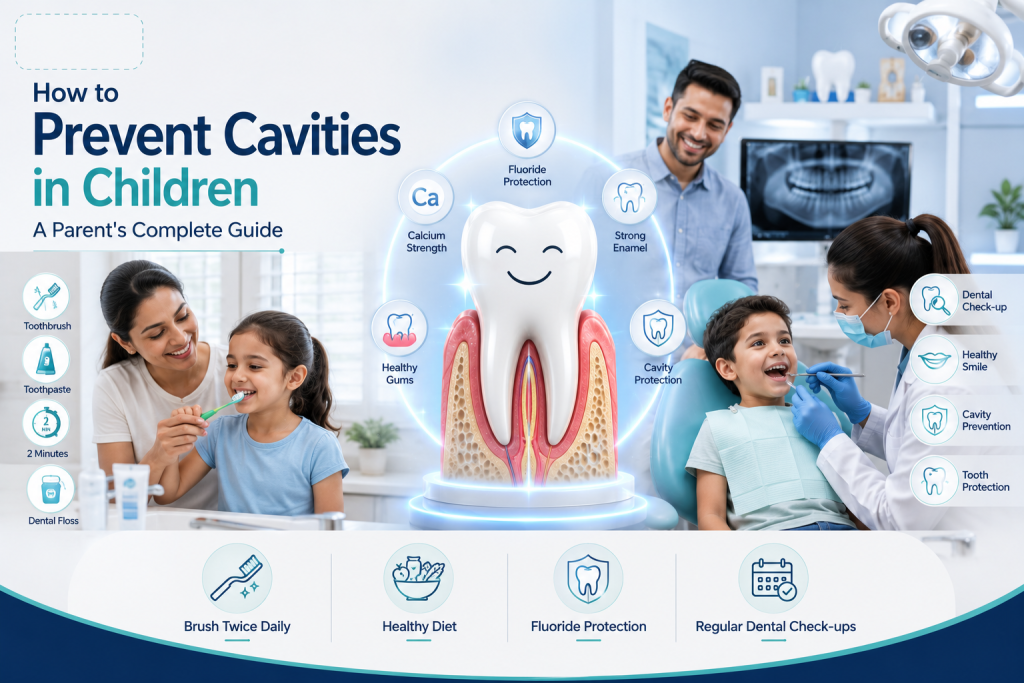
Helping your child develop healthy dental habits is one of the best investments you can make in their future. Simple practices like brushing twice a day, eating a balanced diet, reducing sugary snacks, and scheduling regular dental check-ups can dramatically lower the risk of cavities.
Remember, healthy baby teeth are the foundation of a healthy adult smile.
If you’re searching for the best dentist in Dwarka, a trusted child dentist in Dwarka, or a family-friendly dental clinic in Dwarka, Family Dental is here to support your child’s oral health every step of the way.
Book your child’s dental check-up with Family Dental today and give them the confidence of a healthy, cavity-free smile that lasts a lifetime.