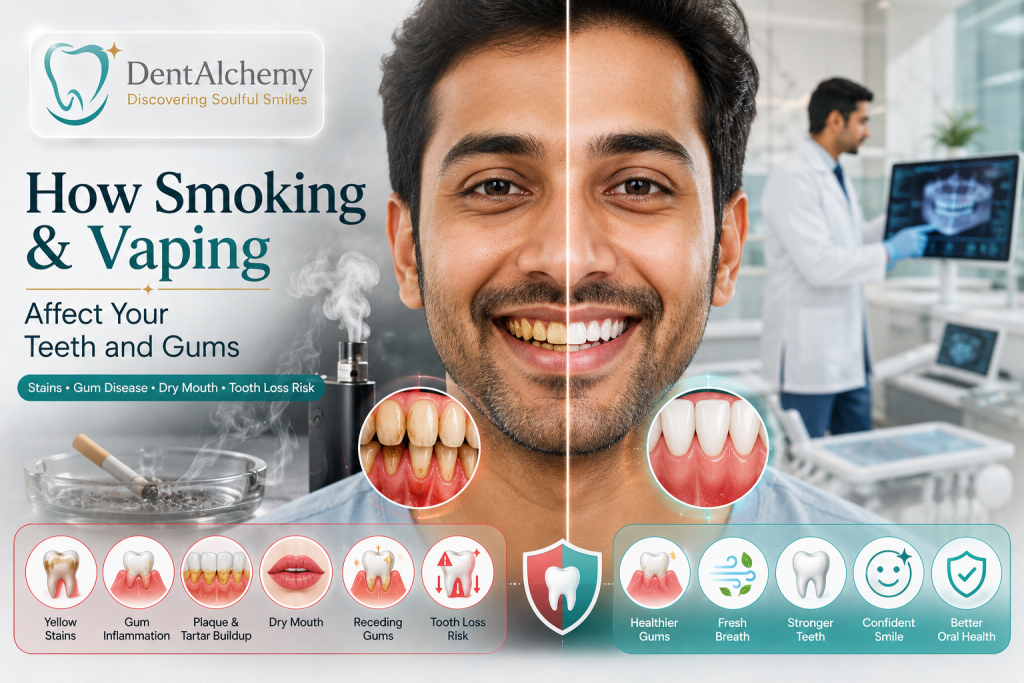
Most people know that smoking is harmful to the lungs and heart, but its impact on oral health is often overlooked. Over time, smoking can damage your teeth, gums, and the tissues inside your mouth, increasing the risk of gum disease, tooth loss, and even oral cancer.
In recent years, vaping has become increasingly popular, with many people believing it’s a safer alternative to smoking. While vaping may contain fewer harmful chemicals than cigarettes, it isn’t harmless. It can still affect your teeth and gums in ways that many people don’t realize.
Whether you smoke traditional cigarettes or use e-cigarettes, understanding how these habits affect your oral health can help you make informed decisions and protect your smile.
If you’re searching for the best dentist in Dwarka, Family Dental offers comprehensive dental care, preventive treatments, and personalized guidance to help you maintain healthy teeth and gums.
How Smoking Damages Your Oral Health
Cigarette smoke contains thousands of harmful chemicals, including nicotine and tar. These substances reduce blood flow to the gums, weaken the body’s natural defence system, and encourage harmful bacteria to grow inside the mouth.
As a result, smokers are more likely to develop serious dental problems than non-smokers.
1. Yellow Teeth and Stubborn Stains
One of the earliest and most noticeable effects of smoking is tooth discoloration.
Nicotine and tar gradually settle on the surface of your teeth, creating yellow or brown stains that become more difficult to remove over time.
While professional teeth cleaning and whitening treatments can improve the appearance of stained teeth, continuing to smoke often causes the stains to return.
2. Persistent Bad Breath
If you’ve noticed ongoing bad breath despite brushing regularly, smoking could be the reason.
Smoking reduces saliva production, creating a dry mouth where bacteria can thrive. These bacteria produce unpleasant-smelling compounds that cause chronic bad breath.
Chewing gum or using mouthwash may provide temporary relief, but the problem usually returns unless the underlying cause is addressed.
3. Gum Disease
Smoking is one of the biggest risk factors for gum disease.
Healthy gums rely on good blood circulation to receive oxygen and nutrients. Smoking reduces blood flow, making it harder for the gums to heal and fight infection.
Early signs of gum disease include:
- Bleeding while brushing
- Swollen or tender gums
- Persistent bad breath
- Gum recession
Without treatment, gum disease can progress, causing loose teeth, bone loss, and eventually tooth loss.
4. Slower Healing After Dental Treatment
Whether you’ve had a tooth extraction, dental implant, gum surgery, or another dental procedure, smoking slows the body’s natural healing process.
Reduced blood supply delays tissue repair and increases the risk of infection.
For this reason, dentists often advise patients to stop smoking before and after major dental treatments, especially dental implant surgery.
5. Increased Risk of Tooth Loss
Because smokers are more likely to develop advanced gum disease, they are also at a much higher risk of losing teeth.
As gum disease destroys the tissues and bone supporting the teeth, teeth may become loose and eventually require extraction.
6. Higher Risk of Oral Cancer
Smoking remains one of the leading causes of oral cancer.
Early warning signs may include:
- Mouth sores that don’t heal
- Red or white patches inside the mouth
- Difficulty swallowing
- Persistent pain
- A lump or thickened area inside the mouth
Regular dental check-ups are essential because dentists can often detect early signs before symptoms become severe.
Is Vaping Really Safer for Your Teeth?
Many people assume vaping is harmless because it doesn’t produce tar like cigarettes.
However, while vaping may reduce exposure to certain toxins, it can still negatively affect your oral health.
Researchers continue to study the long-term effects of vaping, but current evidence suggests it can contribute to several dental problems.
How Vaping Affects Your Teeth and Gums
Dry Mouth
Many vaping liquids contain ingredients that reduce saliva production.
Saliva is essential because it washes away bacteria, neutralises acids, and protects your teeth.
A dry mouth increases the risk of:
- Tooth decay
- Gum disease
- Bad breath
Gum Inflammation
Certain chemicals found in e-cigarette vapour may irritate gum tissue and trigger inflammation.
Over time, this can increase the risk of periodontal disease and gum recession.
Increased Plaque and Bacteria
Studies suggest vaping may change the balance of bacteria inside the mouth, allowing harmful bacteria to grow more easily.
This can increase plaque buildup and raise the likelihood of cavities and gum disease.
Delayed Healing
Many vaping products contain nicotine, which restricts blood flow in much the same way as cigarettes.
As a result, healing after dental procedures may take longer and complications become more likely.
Smoking, Vaping, and Dental Implants
If you’re planning to replace a missing tooth with a dental implant, quitting smoking or vaping is strongly recommended.
For a dental implant to succeed, it must bond firmly with the jawbone through a process called osseointegration.
Nicotine interferes with this natural healing process, increasing the risk of:
- Implant failure
- Infection
- Delayed healing
- Bone loss around the implant
Reducing or quitting tobacco use can significantly improve the success rate of dental implants.
Can Your Mouth Recover After Quitting?
Yes—and the sooner you quit, the better.
After stopping smoking or vaping, many people notice improvements such as:
- Fresher breath
- Healthier gums
- Reduced inflammation
- Better healing after dental treatment
- Lower risk of gum disease
- Improved overall oral health
Although some damage, such as severe gum recession, may require professional treatment, quitting tobacco greatly improves your long-term dental health.
How to Protect Your Teeth and Gums
Whether you’re trying to quit or still smoke or vape, these habits can help protect your oral health:
- Brush twice daily using fluoride toothpaste.
- Floss every day.
- Drink plenty of water.
- Eat a balanced diet.
- Limit sugary snacks and drinks.
- Schedule professional dental cleanings.
- Visit your dentist every six months.
- Seek professional support if you’re ready to quit smoking.
Preventive care can help identify problems early and reduce the risk of serious dental complications.
Why Choose Family Dental in Bangalore?
At Family Dental, we understand that every patient’s lifestyle and oral health needs are different.
Our experienced dentists focus on early diagnosis, preventive care, and personalized treatment plans to help protect your smile—whether you’re a smoker, a vaper, or someone looking to quit.
Our services include:
- Comprehensive dental examinations
- Professional teeth cleaning
- Gum disease treatment
- Teeth whitening
- Dental implants
- Oral cancer screening
- Preventive dental care
- Personalized oral hygiene advice
- Comfortable and patient-friendly treatment
We’re committed to helping you achieve healthier teeth and stronger gums with modern, evidence-based dental care.
Frequently Asked Questions
Does vaping stain teeth?
Vaping usually causes less staining than traditional cigarettes because it doesn’t contain tar, but nicotine can still contribute to tooth discoloration over time.
Can smoking cause gum disease?
Yes. Smoking significantly increases the risk of gum disease by reducing blood flow to the gums and weakening the body’s ability to fight infection.
Will my oral health improve after quitting smoking?
Absolutely. Many people notice healthier gums, fresher breath, and better healing within weeks of quitting. Long-term risks also decrease over time.
Can smokers still get dental implants?
Yes, but smokers have a higher risk of implant failure. Quitting before and after implant surgery greatly improves the chances of long-term success.
Conclusions
Smoking and vaping don’t just affect your general health—they can seriously damage your teeth, gums, and overall oral health. From yellow teeth and bad breath to gum disease, delayed healing, and tooth loss, the effects can become more severe over time if left untreated.
The encouraging news is that many of these problems can be prevented—or significantly improved—by quitting tobacco, maintaining excellent oral hygiene, and visiting your dentist regularly.
If you’re searching for the best dentist in Bangalore or a trusted dental clinic in Bangalore, Family Dental is here to help. Our experienced dental team provides preventive care, gum treatment, professional cleanings, and personalized advice to help you maintain a healthy, confident smile for years to come.
Book your appointment with Family Dental today and take the first step toward healthier teeth, stronger gums, and a brighter future for your smile.